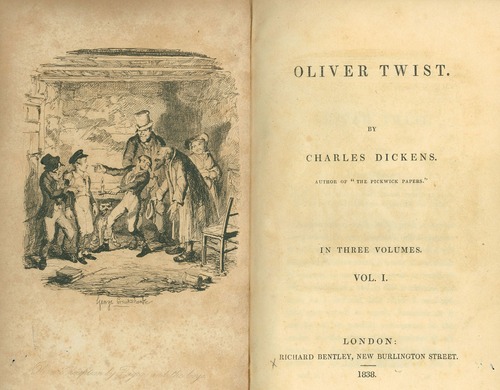
In this extract of Oliver Twist, written by Charles Dickens, it focuses on the introduction of the character of Jack Dawkins, most notably known as Artful Dodger. The choice of words used to describe him insinuate his poor status. The fact he is described ‘as dirty a juvenile’ gives the impression that he resembles what a typical convict would appear to look like. He was narrated to have ‘little, sharp, ugly eyes’, the use of the word ‘ugly’ perhaps insinuates that he does not fit the appearance of an innocent child who had a great childhood. This could be conveyed by the belief that the eyes are the windows to the soul, so if he has ‘ugly eyes’ perhaps Dickens is implying he has an unpleasant soul? Furthermore, he is also mentioned to be ‘queerest looking’ and a ‘common faced boy’ this could perhaps show that boys from a lower class and who are ‘common’ would often be linked to crime as the word ‘juvenile’ was used to describe Artful’s appearance. Although his character is known to often pickpocket, it makes you wonder whether society enforces a self-fulfilling prophecy for people of the likes of artful. Coming from a low status, he was probably stigmatised to have been a criminal, thus he took this route in life as it may have been his only way of surviving.
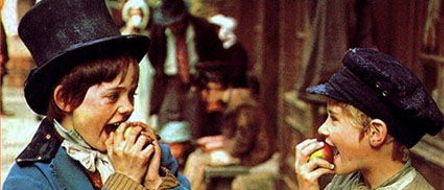
In contrast to the negative depiction of Artful, Oliver is still presented to be uncorrupted and innocent, this is indicated as ‘he had no heart to beg. And there he sat.’. He probably didn’t want to burden anyone, however, the fact he is a child and yet no one inquired as to why he was on the streets is upsetting but perhaps the norm in this society. If he wanted to, he could steal food and resources like Artful, yet he decided to accept his fate and live on the streets hoping for something to change his situation. Oliver and Artful are two very different representations of the working class; were Oliver represents the pure and innocent working-class boy, Artful represents the stereotypical idea of a juvenile working-class boy.
There seems to be a huge culture shift when it came to childhood. Sociologists say that childhood is socially constructed, and you can identify this through this short extract. Children were not as infantilized as they are in today’s society. In the 19th century, which the novel was set, childhood was not as distinct from adulthood, children were expected to work for the family and make a living. And if they were poor, they wouldn’t receive special treatment as children would now. This is shown by the lack of concern people had for Oliver on the streets. Furthermore, Philippe Aries argued children were more like ‘little adults’ and that childhood did not even exist, this is highlighted through the extract as Artful is often described as ‘a young gentleman’. This perhaps made juvenile crime such a prominent issue, rather than sympathising and helping them, they are punished and simply viewed as regular adult criminals.
bibliography
Aries, P.(1962). Centuries of Childhood. New York, Vintage Books.
Dickens, C. (1941). Oliver Twist. New York, Dodd, Mead & Co.
 voices from the inside