The term juvenile delinquent is quite hard to grasp. When you think of children and childhood, you think of innocence, happiness and purity. But a juvenile delinquent completely juxtaposes these ideas. It makes you question what went wrong in order to make a child become a criminal? There are many aspects to this, especially poverty. Mary Carpenter wrote that it was an ‘anomaly’, the term deviates from our expectations of children, it should not be a reality. She also goes on to say that these delinquents are ‘perishing from lack of knowledge, from lack of parental care, of all that should surround childhood, but they are positively become dangerous; dangerous to society’. Carpenter is placing the blame on child neglect, which is a logical standpoint as a child brought up with knowledge, love and care would be protected from such a tragic fate.
when you think about this perspective, it makes you sympathise for these children who have been directed on the wrong path in life. this makes me think about the novel Oliver Twist and particularly, Artful Dodger who has been stigmatised as a petty thief. However, the reality of the situation is that his childhood was non-existent as he had to look out for himself and survive in his own terms. Thus, the use of describing him as a ‘young gentlemen’ essentially strips away any identification of him being a child and puts him in a position that prevents people from sympathising for him as he is portrayed to be a typical adult criminal. Where in contrast, Oliver Is portrayed to be the idealised working-class child, by prioritising his good morals, he differs from Artful despite being in a similar position as him.
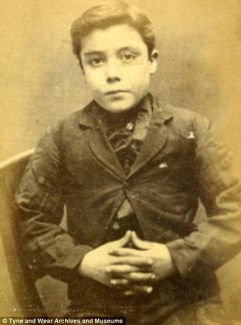
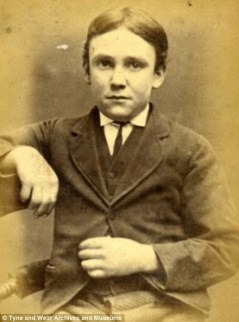
Leonard Stephenson and Michael Clement Fisher
In contrast to Carpenters perspective, at the time, the blame for the corruption of children was shifted on the books they read. It was believed to have corrupted the mind of children. A class is not a barrier in this case as even children from high statuses were not exempt from being juvenile delinquents. For example, two boys named Henry Leonard Stephenson, aged 12 and Michael Clement Fisher, aged 13, were choir boys from respectable families. Yet, they had been imprisoned for two months for breaking into three houses in 1873. Newspapers blamed the boys’ crime on their taste for the ‘wrong sort of books’.
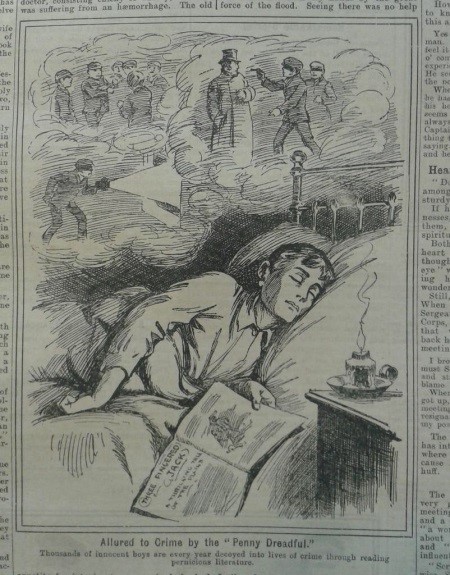
Furthermore, in a newspaper headlined ‘Allured to Crime by the Penny Dreadful’ highlights how a ‘pernicious literature’ corrupts a child into a life of crime. I believe this conveys a moral panic that had surfaced in society regarding the issue of young boys becoming criminals. It also insinuates that they believed reading a novel would influence a child through their subconscious and dreams by poisoning their mind and manipulating their ideas, morals and beliefs. Carpenters argument, however, points out that these people who are disregarding their own possible neglect for their children.
bibliography
‘Allured to Crime by the “Penny Dreadful”’, War Cry, 1 Dec 1900.
Carpenter, M.(1852) Juvenile Delinquents, their Condition and Treatment
Parsons, C and Oliver, ( 2012) Fagin’s children: Mugshots of Victorian thieves as young as 11 who were sentenced to hard labour for stealing clothes and metal. daily mail [website]
 voices from the inside