This criminal broadside goes into depth about the murder of Mr John Richardson who was a
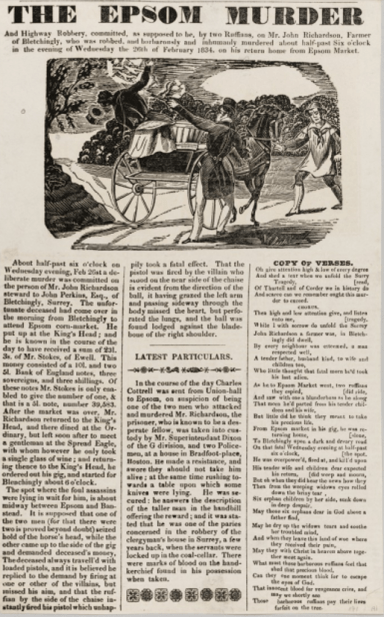
steward to John Perkius of Bletchingly, Surrey which had occurred at 18:30 on the 26th Wednesday, February 1834. The broadside discloses the events of Mr John Richardson assassination in extensive detail, revealing that the assassinators were keeping track of Richardson as he had received a sum amount of money. They mention how Richardson always kept a pistol on him, this perhaps implies that he was aware of the dangerous people he could attract. However, he was unfortunate to protect himself as he had missed his shot to the villain, he was then fatally struck by a bullet by them.
It is clear to see that the killers had a clear motive, which was to rob this man. The broadside describes the convict as a ‘desperate fellow’, this could highlight the ‘every man for himself’ belief. Once finding out about a man getting a lot of money, robbing him may have been an easier task for them than working hard for their income. Also, killing the man would prevent any difficulties in the future.
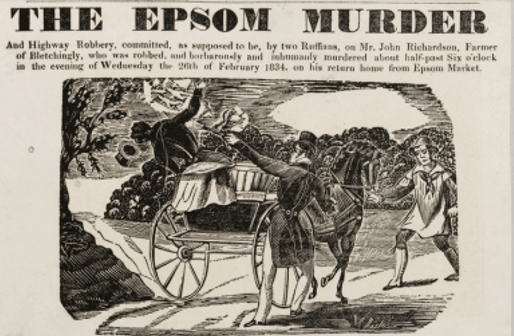
Immediately, the first thing I noticed when I read ‘the Epsom murder’ broadside was the drawing of the murder that took place, it was something perhaps necessary when broadcasting such stories, so readers can visualise the event. These drawings in the 17th-century could be glamorizing the actual event to attract readers, especially with the appeal of gothic literature. Furthermore, the large bold capitalized text writing ‘The Epsom Murder’ is very strategic as it would cause people to be curious and want to purchase the newspaper.
The broadside then goes onto mention the punishment side to the story, one of the ‘suspects’ was captured, and despite his plea that he would not be taken alive – implying he would not be imprisoned – they had discovered blood on his handkerchief. This ends the story with a satisfying conclusion, Richardson had received justice for his murder.
On the right side of the broadside, there a ‘copy of verses’ which consists of kind sentences about Richardson, stating he was ‘a tender father, husband kind, to wife and children too’ ‘a man respected well’. This allows readers to feel consoled and feel sympathetic towards him.
Bibliography
Harvard Law School Library, Executions of criminals: more generally known by the uninviting name of “Dying speeches.” Harvard University
 voices from the inside